Radix-2 Technologies
Simulation to Measured Hardware SBA-Certified SDVOSB

Engineering Case Studies

For Radix-2 Technologies, simulation is not an end product. Each engineering study follows the complete technical chain from mathematical formulation and full-wave electromagnetic or algorithmic modeling through physical hardware implementation and laboratory measurement.

Standard Radix-2 Case Study Methodology
01
Problem
02
Requirements
03
Analysis
04
Design
05
Simulation
06
Fabrication
07
Measurement
08
Result
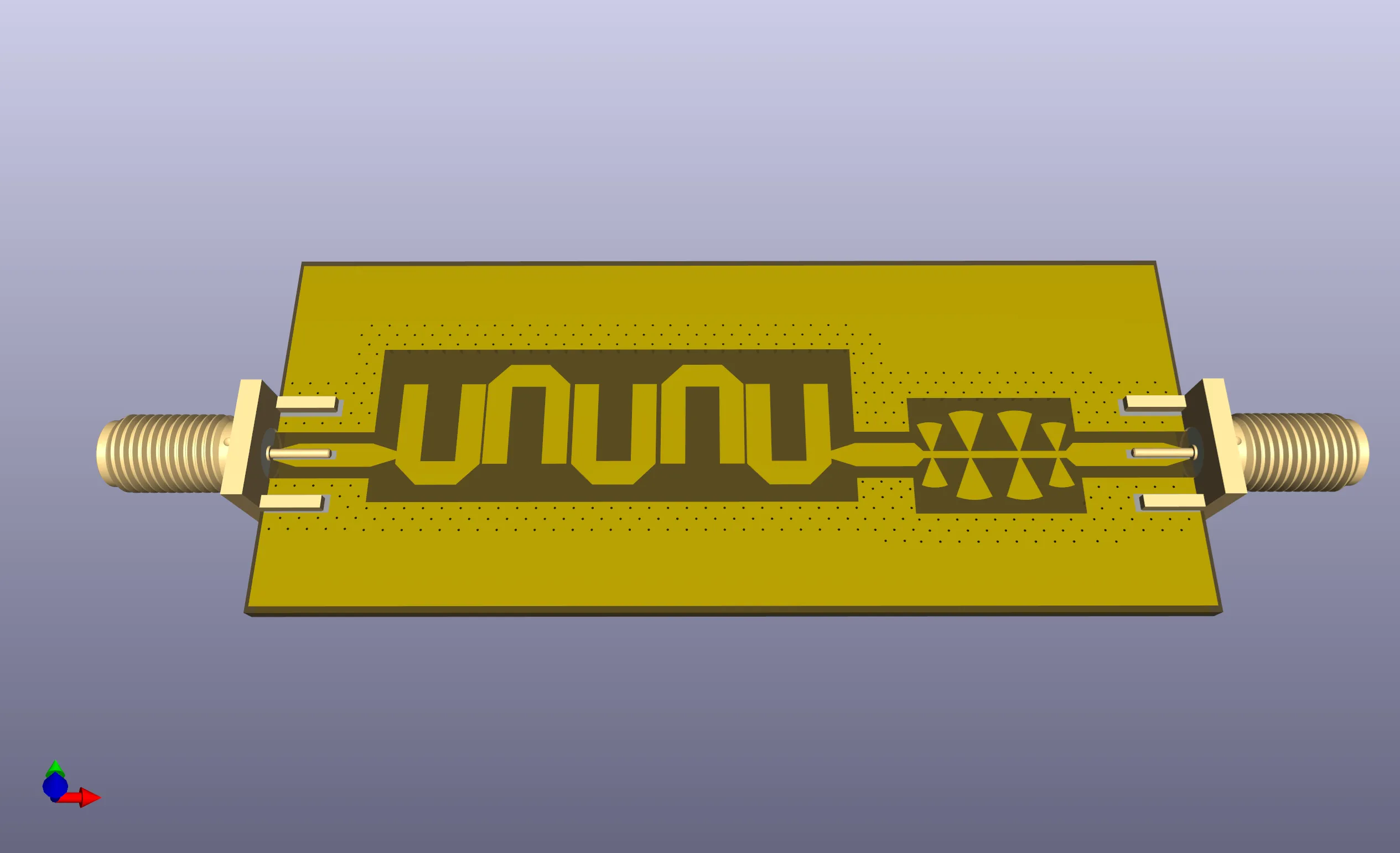
Designing and Fabricating a Microwave Microstripline Filter: From HFSS Simulation to PCB Testing – Part 2
Flagship Simulation-to-Hardware Case Study 5.5 GHz Microwave Filter & Spurious Harmonic Suppression

Designing and Fabricating a Microwave Microstripline Filter: From HFSS Simulation to PCB Testing – Part 2

Problem: Distributed bandpass filters suffer from harmonic spurious passbands (particularly at 2f₀ and 3f₀) that allow mixer image and intermodulation products to leak into receiver front-ends.
Analysis & Implementation: Hammerstad & Jensen analytical synthesis → 5-pole folded Hairpin bandpass + 9th-order radial-stub Butterworth lowpass cascade → Full-wave 3D Ansys HFSS Optimetrics → PTFE PCB fabrication → Scalar S21/S11 bench characterization.
Measured / Verified Result: Achieved < 1.5 dB passband insertion loss at 5.5 GHz with > 40 dB out-of-band harmonic suppression up to 20 GHz, validating simulated vs. measured S-parameters on low-cost PTFE laminate.
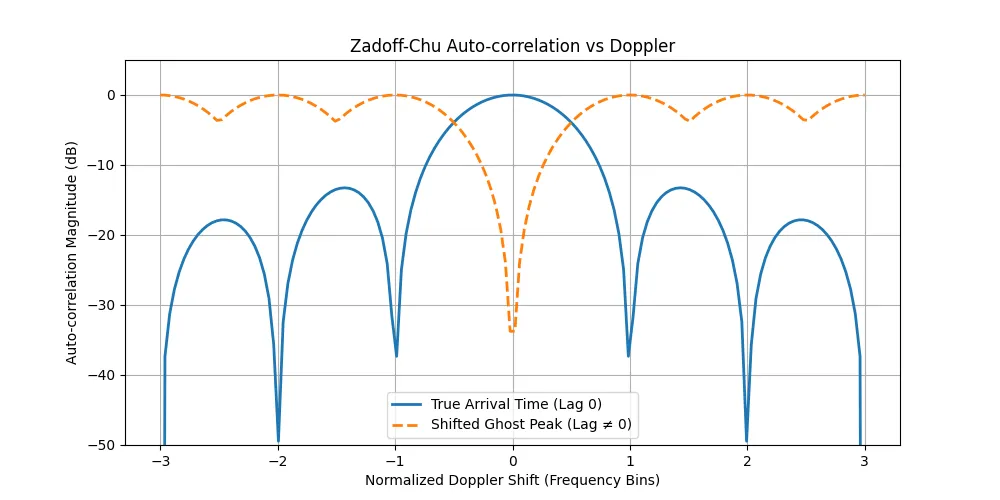
Clash of the Telecom Codes: Zadoff-Chu vs. Gold Sequences
Waveform & SatCom PHY Case Study LEO Satellite Synchronization Under High Doppler Shift

Clash of the Telecom Codes: Zadoff-Chu vs. Gold Sequences

Problem: High radial velocities in Low Earth Orbit (LEO) satellite passes induce severe carrier frequency offsets that degrade correlation peaks and introduce delay-Doppler range-rate coupling.
Analysis & Implementation: Mathematical derivation of periodic/cyclic autocorrelation & cross-correlation bounds → Bit-true IQ time/frequency modeling → Delay-Doppler ambiguity surface evaluation across ±2.0 FFT frequency bins.
Measured / Verified Result: Quantified the exact Doppler collapse threshold of Gold codes versus Zadoff-Chu CAZAC sequences and demonstrated why ZC root selection governs range-Doppler sidelobe floors.
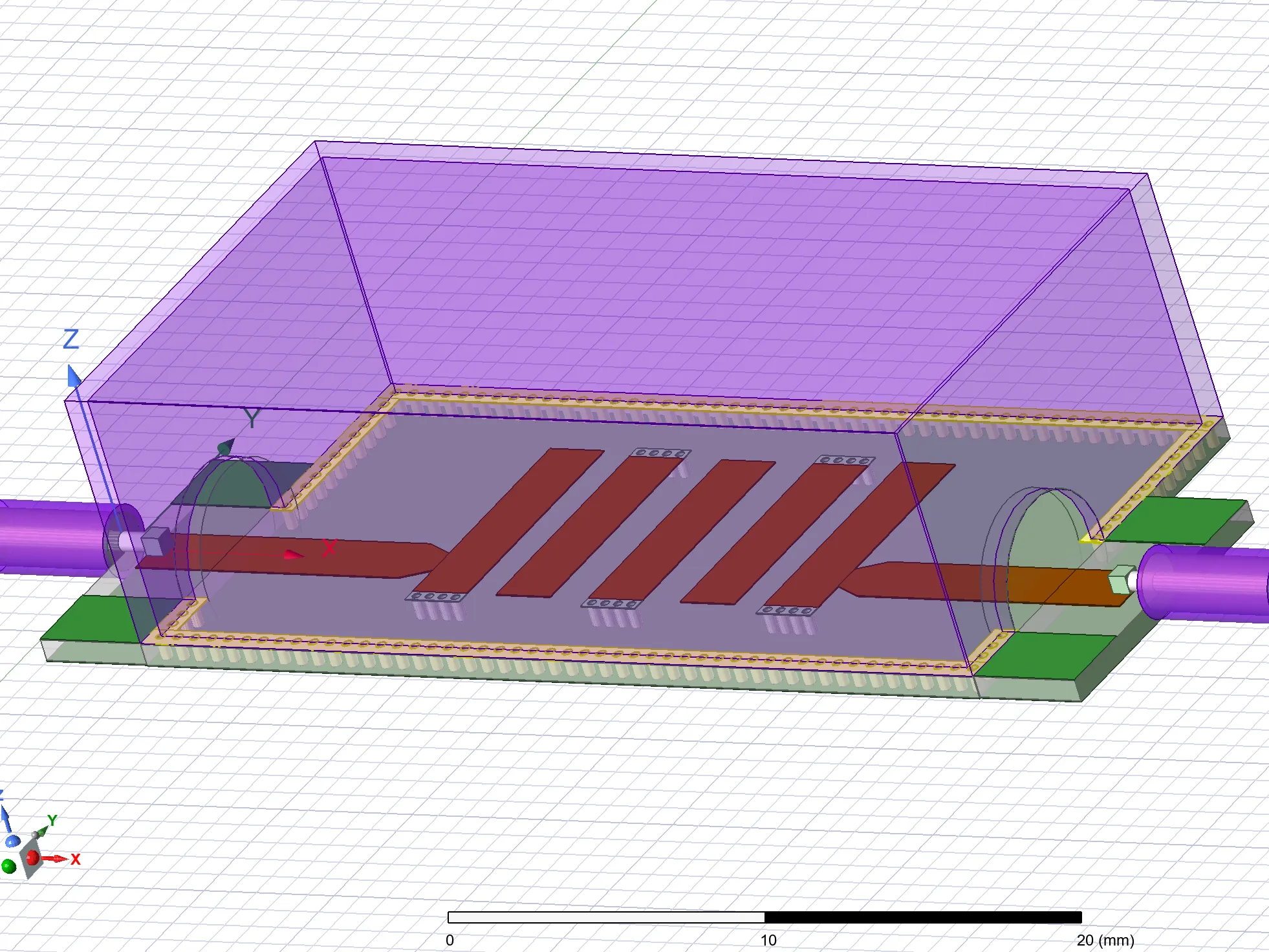
Designing and Fabricating a Microwave Microstripline Filter: From HFSS Simulation to PCB Testing
EM Simulation & Hardware Verification 5.5 GHz Interdigital Bandpass Filter & Shielding Cavity Analysis

Designing and Fabricating a Microwave Microstripline Filter: From HFSS Simulation to PCB Testing

Problem: Translating ideal lumped/distributed filter synthesis to real PCB manufacturing tolerances while accounting for SMA launch discontinuities, via-stitching inductance, and metallic enclosure detuning.
Analysis & Implementation: Prototype dimensioning → Parametric 3D Ansys HFSS modal wave-port simulation → FreeCAD shielded enclosure modeling → KiCad controlled-impedance layout → Signal Hound BB60C / TG124A scalar S-parameter verification.
Measured / Verified Result: Characterized passband frequency shift, shield-induced dielectric loading, and return-loss trade-offs between unshielded and enclosed microwave PCB assemblies.
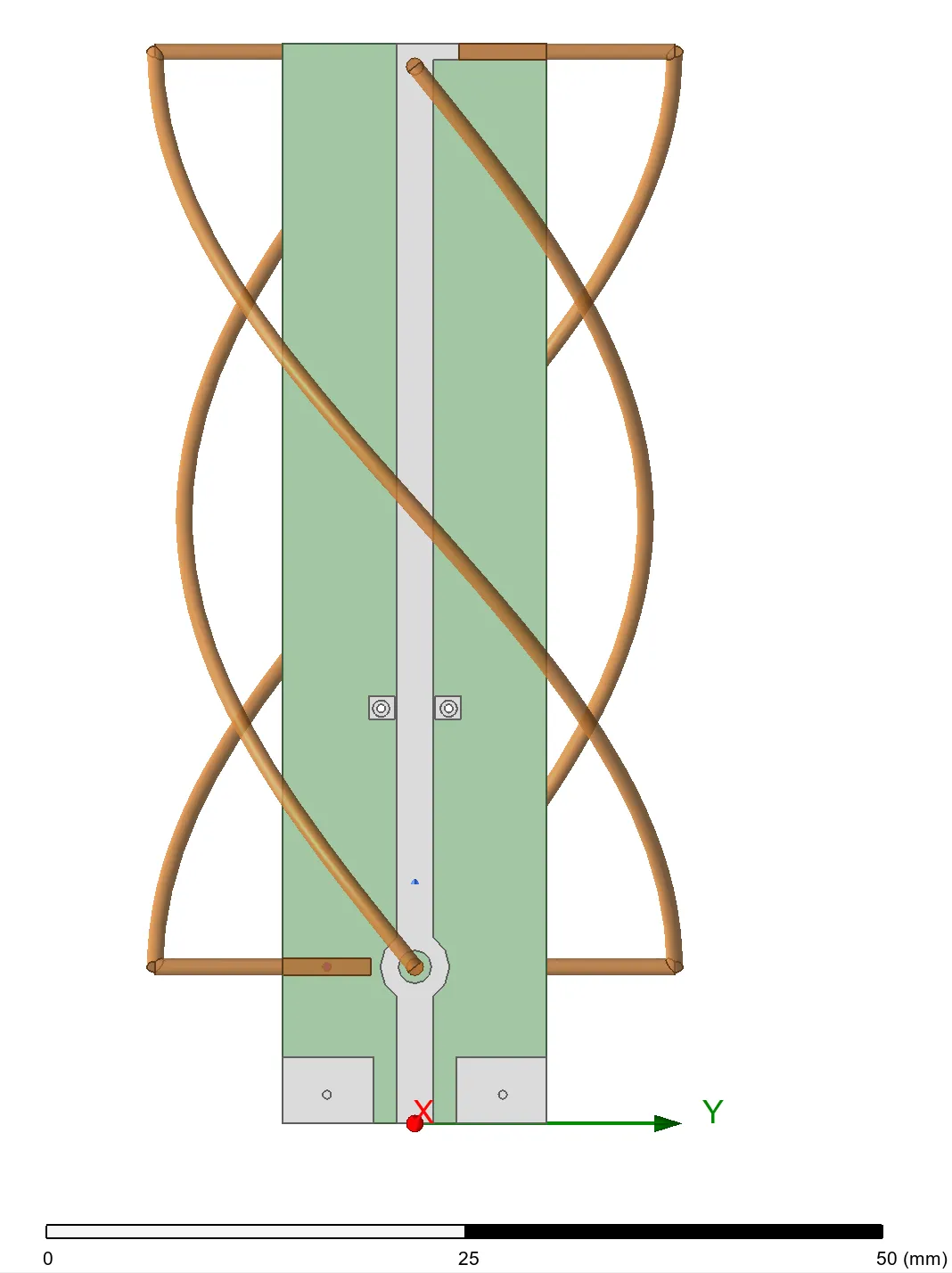
GPS Quadrifilar helix antenna model
3D Antenna Modeling Case Study L1 GNSS Quadrifilar Helix (QFH) Antenna Synthesis

GPS Quadrifilar helix antenna model

Problem: Receiving circularly polarized L-band satellite transmissions from horizon-to-zenith without mechanical tracking requires wide-beamwidth hemispherical RHCP gain and precise quadrature phase excitation.
Analysis & Implementation: Reverse-engineering physical Vaisala GPS sonde geometry → 3D parametric helical modeling in Ansys HFSS → Far-field radiation pattern, axial ratio, and impedance sweep characterization.
Measured / Verified Result: Validated omnidirectional upper-hemisphere gain pattern and resonance sensitivity to helical pitch and loop diameter.
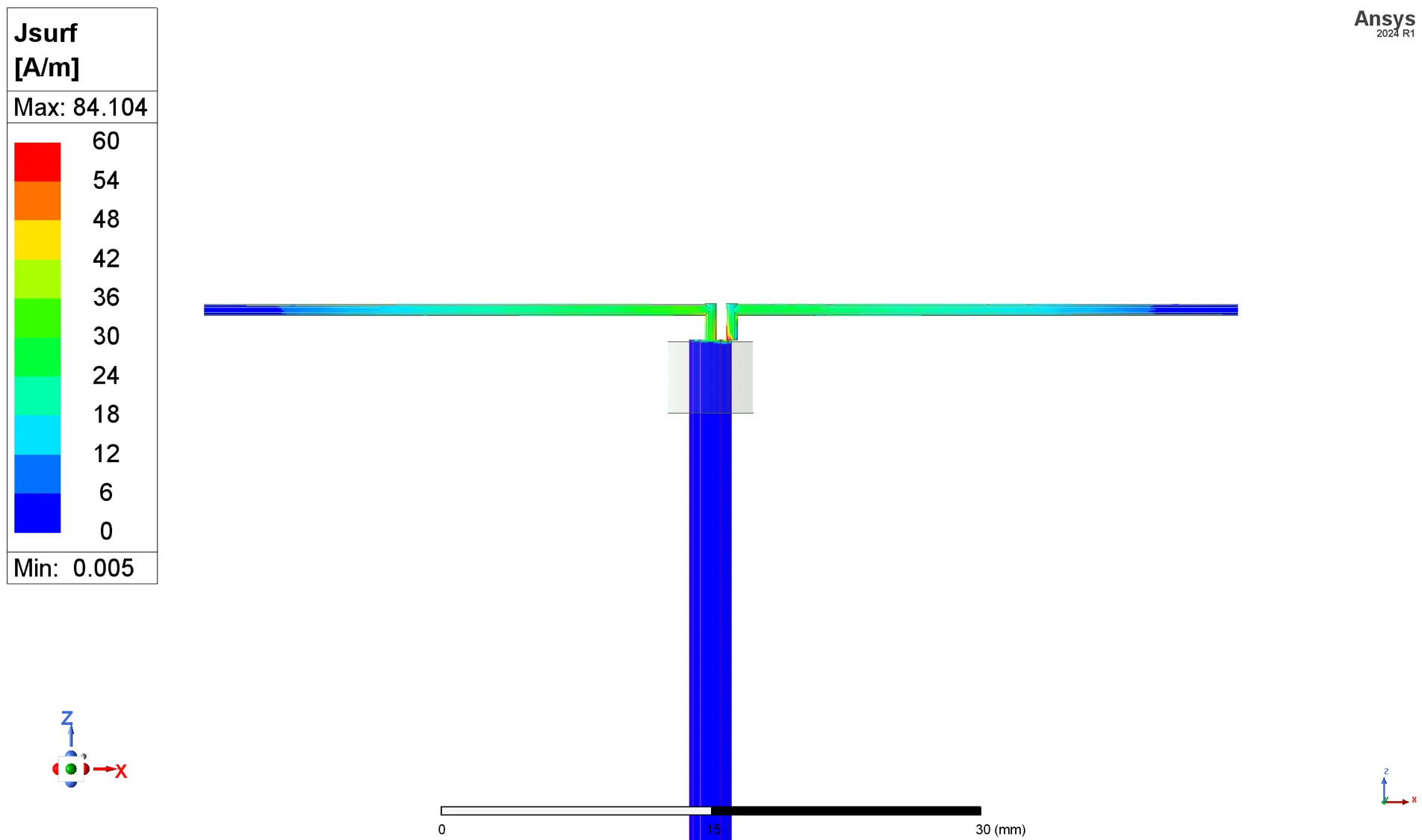
balanced dipole fed by unbalanced coax
Electromagnetic Physics Case Study Coaxial Feedline Radiation & Balun Current Choking

balanced dipole fed by unbalanced coax

Problem: Feeding a balanced dipole directly from unbalanced coaxial cable excites common-mode currents along the outer shield surface, distorting the radiation pattern and detuning feedpoint impedance.
Analysis & Implementation: Skin-depth and three-conductor transmission line analysis → 3D Ansys HFSS surface current density modeling with and without a quarter-wave sleeve balun.
Measured / Verified Result: Demonstrated common-mode shield current suppression and restoration of symmetric dipole radiation patterns.
Active Engineering & Laboratory Pipeline

Recent & Upcoming Engineering Studies

Representative areas of recent hardware, simulation, and signal-processing work available for client briefings and upcoming publication.

Antenna Synthesis & Validation

915 MHz ISM Antenna Design, Optimization & Measured vs. Simulated Characterization

Parametric HFSS optimization, impedance matching, fabrication, and VNA/spectrum bench correlation.

Microwave Filter Engineering

Cavity & Interdigital Filter Coupling Matrix and Bandwidth Optimization

Coupling coefficient extraction, resonator spacing sensitivity, and Q-factor trade studies.

Automated RF Test & Measurement

Automated Receiver & Component Characterization with Signal Hound BB60C & VSG60A

Programmatic vector signal generation, real-time spectrum capture, and repeatable calibration workflows.

FPGA vs. Host Signal Processing

AMD Kria FPGA Acceleration vs. Optimized Host DSP: Quantitative Partitioning Benchmarks

When custom VHDL/FPGA logic outperforms—and when it loses to—vectorized host CPU processing once PCIe/AXI transfer overhead is measured.

Array Processing & Direction Finding

Coherent Multi-Channel Receiver Architecture & Angle-of-Arrival (AoA) Estimation

Phase-coherent SDR front-ends, calibration, and subspace/interferometric AoA algorithm performance.

Weather Radar & Remote Sensing

NEXRAD Doppler Weather Radar Signal Processing & Atmospheric Retrieval

Base reflectivity/velocity moment estimation, clutter suppression, and quantitative meteorological sensing.